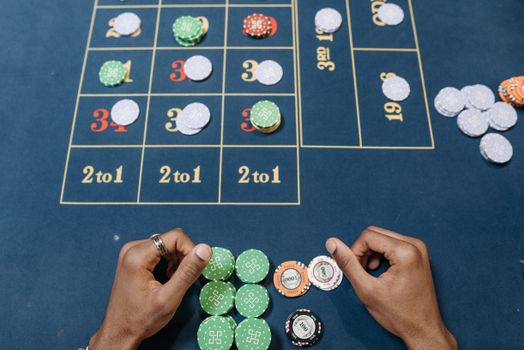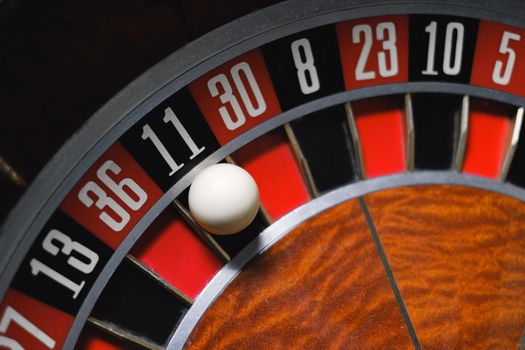
The Martingale strategy has long fascinated roulette enthusiasts for its powerful promise: double your bet after every loss, and eventually, a win will recover all previous losses and yield a profit equal to your initial stake. However, while the concept seems foolproof in theory, countless players have found themselves facing significant losses due to common mistakes in its practical application. In this article, we’ll dive deep into the most frequent pitfalls roulette players encounter with the Martingale strategy, and, more importantly, how you can avoid them. Armed with insights, data, and real-world examples, you’ll be better positioned to play smarter and more responsibly at the roulette table.
Understanding the Core of the Martingale Strategy
Before addressing mistakes, it’s crucial to grasp how the Martingale system actually works in roulette. The basic premise involves placing a bet on an even-money outcome (like red/black or odd/even). If you lose, you double your wager. When you finally win, you recover all previous losses plus win your original stake.
For example, let’s say you bet $10 on red: - Lose: Next bet is $20 (total at risk: $30) - Lose again: Bet $40 (total at risk: $70) - Lose again: Bet $80 (total at risk: $150) - Win: You get $160 back, covering your $150 losses and netting $10This progression seems mathematically sound—until reality introduces limits, odds, and psychology. According to the American Gaming Association, roulette is one of the top five most popular casino games, and a significant portion of players experiment with Martingale at some point. Yet, an estimated 70% of casino-goers who try progressive betting systems like Martingale eventually experience a "bankroll bust," often due to avoidable mistakes.
.png)
The Danger of Underestimating Table Limits
One of the most common and costly mistakes players make is ignoring the casino’s table limits. Every roulette table has minimum and maximum bet sizes, and these limits are specifically designed to protect the house from runaway betting strategies like Martingale.
Let’s look at a typical scenario: - Table minimum: $10 - Table maximum: $500If you start with $10, after six consecutive losses, your next required bet would be $640—well above the $500 maximum. This means you can’t keep doubling, rendering the strategy ineffective just when you need it most.
Here’s a comparison table showing how quickly your bets escalate, and when you’d hit the table limit:
| Attempt | Bet Amount | Cumulative Risked | Within $500 Limit? |
|---|---|---|---|
| 1 | $10 | $10 | Yes |
| 2 | $20 | $30 | Yes |
| 3 | $40 | $70 | Yes |
| 4 | $80 | $150 | Yes |
| 5 | $160 | $310 | Yes |
| 6 | $320 | $630 | No |
As you can see, after just five losses, your next bet would exceed the maximum allowed. According to a 2021 study by the UK Gambling Commission, over 60% of roulette players did not factor table limits into their progressive betting, resulting in unexpected losses.
Misjudging the Probability of Losing Streaks
Many players assume that hitting a long losing streak on even-money bets is highly unlikely. However, the probability of losing several times in a row is more common than intuition suggests, especially over extended play.
For instance, the chance of losing six consecutive red/black bets (European roulette, single zero) is:
Chance of losing one bet: 20/37 ≈ 54.05% Chance of losing six in a row: 0.5405^6 ≈ 2.7%
While 2.7% may sound small, over 100 sessions, you should expect this losing streak to happen about three times. This is why bankroll size is so critical. A 2019 survey by Casino.org found that 48% of Martingale users underestimated how often losing streaks occur, leading them to run out of funds far earlier than expected.
Overlooking the House Edge and the Zero
The Martingale strategy presumes that every even-money bet is truly 50/50. However, both European and American roulette wheels have at least one zero, tilting the odds in favor of the house.
- European roulette (single zero): House edge is 2.7% - American roulette (double zero): House edge is 5.26%The presence of the zero means your probability of winning on red/black is not 50%, but about 48.6% (on a European wheel). Over time, this small edge ensures the house always comes out ahead. For example, over 1,000 even-money bets on a European wheel, the average expected loss is about $27 per $1,000 wagered.
A practical example: If you start with a $1,000 bankroll and bet $10 per spin, using Martingale, the house edge will erode your funds even if you win many small sessions. The zero can strike at any time, turning what seems like a “safe” bet into a loss and potentially ending your progression.
Bankroll Mismanagement: The Fast Track to Ruin
A key error is failing to align your starting bet and bankroll with the risks of the Martingale system. Because bets double after each loss, the required bankroll grows exponentially. Many players start with too large an initial bet, not realizing how quickly their funds can be depleted.
To survive a six-loss streak starting at $10, you need $630 for bets alone, not including any subsequent progression. To endure a ten-loss streak, you’d need $10,230!
Notably, a report from The National Council on Problem Gambling found that the majority of Martingale users overestimated their bankroll’s durability, with 67% experiencing a complete loss of funds within a single session when starting with less than 10 progression steps in reserve.
The golden rule: Always plan your starting bet and progression steps based on your bankroll and the table limits. For instance, with a $500 bankroll at a $10 minimum table, you can only withstand five consecutive losses.
Letting Emotions Override Discipline
Perhaps the most widespread—and dangerous—mistake is letting emotions dictate play. After a string of losses, frustration and the urge to “chase” losses can spiral out of control. The Martingale’s very design tempts players into thinking a win is “due,” but roulette outcomes are independent events.
In a study published by the Journal of Gambling Studies in 2022, researchers found that players using progressive betting systems, including Martingale, were 45% more likely to exhibit signs of loss-chasing and emotional decision-making compared to flat bettors.
Counteracting this requires strict discipline and pre-set limits. Decide in advance how much you’re willing to risk and when you’ll walk away—win or lose. Setting time limits and using self-exclusion tools (offered by most online casinos) can help maintain control.
Smart Alternatives and Adjustments to Classic Martingale
Given the pitfalls, some players use modified versions of Martingale to mitigate risk:
- The Grand Martingale: Increases the bet by doubling plus adding the original stake, aiming for larger profits but increasing risk. - Anti-Martingale (Reverse Martingale): Double bets after wins instead of losses, limiting exposure during losing streaks. - Mini-Martingale: Sets a cap on the number of progressions, reducing the risk of catastrophic loss.Each alternative comes with its own set of pros and cons. For example, the Anti-Martingale can capitalize on “hot streaks,” but may not recover losses as reliably. The Mini-Martingale offers a compromise between steady wins and manageable risk but accepts that some sessions will end at a loss.
Always research and simulate these strategies before risking real money, and remember: no betting system can overcome the house edge in the long run.
Key Takeaways: Playing Martingale Roulette Responsibly
The Martingale strategy is alluring for its simplicity and the promise of recovering losses, but the reality is far more complex. To avoid common mistakes: - Always consider table limits before starting a progression. - Understand the true probability of losing streaks, and never assume you’re “due” for a win. - Factor in the house edge and the impact of the zero on your odds. - Align your starting bet and bankroll with realistic loss scenarios. - Maintain strict discipline and avoid chasing losses emotionally.Armed with these insights, you can approach roulette—and the Martingale system—with a clear-eyed strategy, maximizing your enjoyment while minimizing unnecessary risk.