Roulette is one of the most iconic and enduring games in the world of gambling. Its spinning wheel, bouncing ball, and the suspenseful wait for the winning number have captivated players for centuries. But beneath its simple surface lies a fascinating world of mathematics, probability, and game design. Whether you’re a newcomer curious about the basics, or a casual player looking to understand your odds, this guide will give you an in-depth look at how roulette really works—from the anatomy of the wheel to the intricacies of your betting chances.
The Origins and Appeal of Roulette
Roulette’s mystique begins with its rich history. The word "roulette" comes from the French for "little wheel." The game originated in 18th-century France, evolving from earlier games and mechanical devices designed by the mathematician Blaise Pascal. By the late 1700s, it was a fixture in Parisian casinos, and its popularity soon swept across Europe and the world.
What sets roulette apart is its universal accessibility. There’s no skill barrier—anyone can walk up to the wheel, place a bet, and feel the same rush of anticipation. This simplicity, combined with the allure of potentially big payouts, keeps millions spinning the wheel every year. Statistically, the global casino gaming market, which includes roulette, is projected to reach $153.2 billion by 2028, with roulette consistently ranking among the top five most-played games.
.png)
The Anatomy of a Roulette Wheel
Understanding the wheel itself is key to understanding the game. There are two main types of roulette wheels: European and American. While they look similar at first glance, the differences between them have a significant impact on your odds.
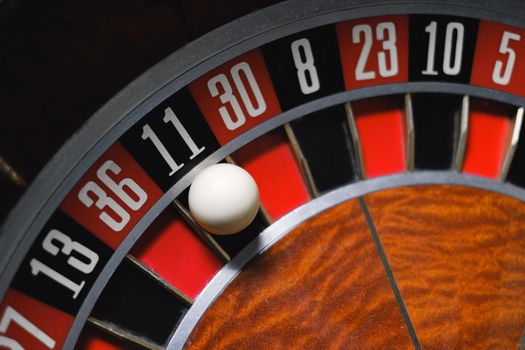
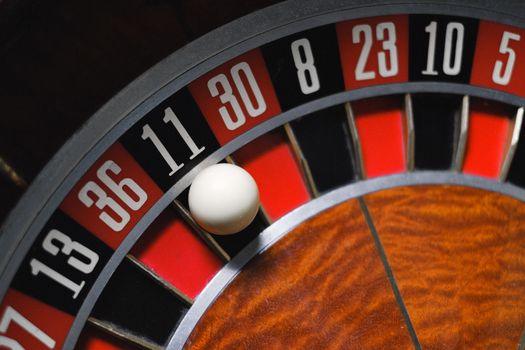
A standard European roulette wheel has 37 numbered pockets: numbers 1 through 36 and a single green zero (0). The American version adds a double zero (00), resulting in 38 pockets. The arrangement of the numbers is not sequential but carefully designed to create balance and unpredictability.
The colors and layout also matter. Numbers 1–10 and 19–28 are colored alternately red and black, with 0 (and 00, if present) always green. The sequence and placement, especially of the zeros, are critical because they give the casino its edge.
Roulette wheels are precision instruments. High-end wheels are manufactured to exacting standards, as even a tiny imperfection could bias outcomes. Casinos routinely check and recalibrate their wheels—one famous case saw the Ritz Club in London lose over £1.3 million in 2004 when gamblers exploited a minuscule wheel bias using laser scanners and microcomputers.
Types of Bets: Inside vs. Outside
Roulette offers a diverse range of betting options, each with its own risk and reward profile. These bets are generally divided into "inside" and "outside" bets:
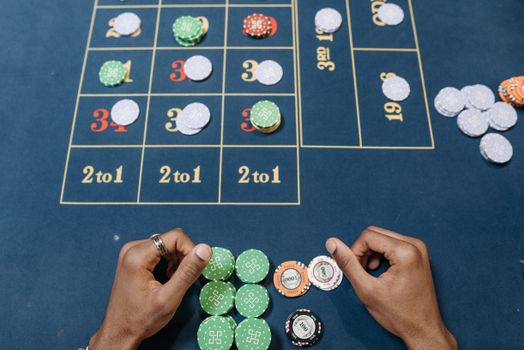
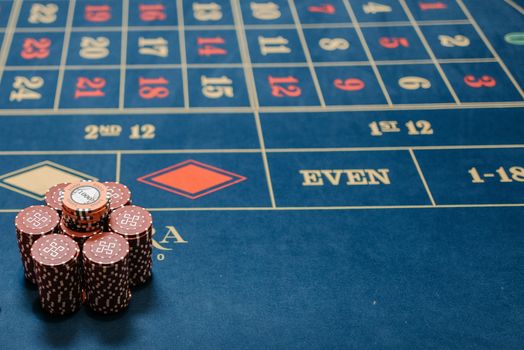
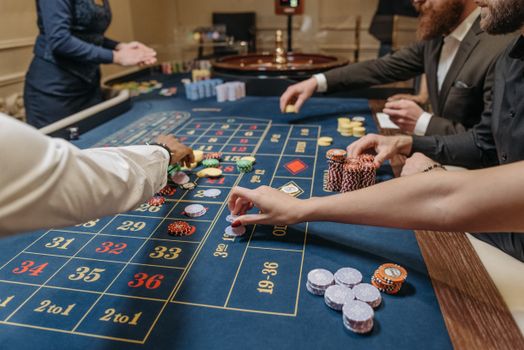
Inside Bets: - Straight Up: Betting on a single number (pays 35 to 1) - Split: Betting on two adjacent numbers (pays 17 to 1) - Street: Betting on three numbers in a row (pays 11 to 1) - Corner: Betting on four numbers that form a square (pays 8 to 1) - Six Line: Betting on two adjacent rows, six numbers total (pays 5 to 1) Outside Bets: - Red or Black: Betting the ball will land on a red or black number (pays 1 to 1) - Even or Odd: Betting on even or odd numbers (pays 1 to 1) - High or Low: Betting on 1–18 (low) or 19–36 (high) (pays 1 to 1) - Dozens: Betting on first (1–12), second (13–24), or third dozen (25–36) (pays 2 to 1) - Columns: Betting on one of the three vertical columns on the betting layout (pays 2 to 1)The variety of bets means you can tailor your risk level. A straight-up bet on a single number is unlikely to win (about 2.70% chance in European roulette), but the payout is high. By contrast, betting on red or black gives you nearly a 50% chance—though not quite, due to the green zero(s).
The Odds and House Edge: European vs. American Roulette
The central question for many players is: What are your chances of winning at roulette? The answer depends largely on the type of wheel being used.
Here’s a comparative overview of the odds and house edge for the two main roulette variants:
| Type | Number of Pockets | Single Number Bet Odds | House Edge (%) |
|---|---|---|---|
| European Roulette | 37 (1-36 + 0) | 1 in 37 (2.70%) | 2.70 |
| American Roulette | 38 (1-36 + 0 + 00) | 1 in 38 (2.63%) | 5.26 |
This table reveals two key facts:
1. The house edge in European roulette is almost half that of American roulette. Over time, this difference significantly impacts your expected returns. 2. The addition of the double zero (00) in American roulette lowers your chances of winning any given bet, making it less favorable for players.Why does this matter? If you play 1,000 spins at $10 per spin in European roulette, you’ll lose an average of $270 in the long run, compared to $526 in American roulette. For this reason, seasoned players always seek out the European (or French) version when possible.
Understanding Roulette Odds and Payouts
Roulette payouts are designed to pay less than the true odds of winning, which is how the casino maintains its edge. Let’s break down a few examples:
- Straight Up (single number) on European wheel: You have a 1 in 37 chance (2.70%). The payout is 35 to 1, but if it were fair, it would be 36 to 1. - Red or Black: 18 red pockets out of 37. Your chance is 18/37, or about 48.65%. The payout is 1 to 1, but the presence of the green zero means it’s not precisely 50/50.The difference between true odds and payout odds is the house edge. Casinos rely on this mathematical advantage to guarantee long-term profitability. In fact, the American double-zero roulette wheel (with its 5.26% house edge) is considered one of the least favorable mainstream casino games for players.
French Roulette and the 'La Partage' Rule
There’s another, lesser-known variant called French roulette, found in some European casinos and select online platforms. What makes French roulette unique isn’t just the layout, but also special rules like "La Partage" and "En Prison."
With "La Partage," if you place an even-money bet (e.g., red/black, even/odd) and the ball lands on zero, you lose only half your bet instead of the whole amount. This rule cuts the house edge on even-money bets down to 1.35%, making it one of the best bets in any casino.
For example, let’s say you bet $20 on black and the ball lands on zero. Instead of losing the entire $20, you get $10 back. Over thousands of spins, this makes a significant difference for players who favor the safer outside bets.
Probabilities and Misconceptions in Roulette
Roulette is a game of pure chance, and each spin is independent. This means the odds are the same on every spin, no matter what has happened before. Yet, many common misconceptions persist:
- The Gambler’s Fallacy: Some players believe if red has come up several times in a row, black is "due" to appear. In reality, the probability remains the same for each spin: about 48.65% for red or black in European roulette. - Hot and Cold Numbers: Casinos often display recent winning numbers, leading players to chase "hot" streaks or avoid "cold" numbers. In practice, every number has the exact same chance of being selected on the next spin. - Betting Systems: Martingale, Fibonacci, and other systems are popular, but none can overcome the house edge. These approaches might change the volatility of your session, but they don’t alter the underlying odds.In 1913, a famous incident at the Monte Carlo Casino saw the ball land on black 26 times in a row. Players lost millions betting on red, believing it was "overdue." This event remains a classic example of the gambler’s fallacy in action.
Conclusion: The Thrill and Reality of the Roulette Wheel
Roulette is a game that combines luck, suspense, and a touch of mathematical intrigue. Understanding the differences between European and American wheels, the range of bets, and the underlying odds can help you make more informed decisions—and enjoy the game for what it is: a thrilling, random experience. While no strategy can eliminate the house edge, knowledge is your best ally. If you’re going to play, seek out the best odds (prefer European or French roulette), be mindful of your bets, and always play within your limits.