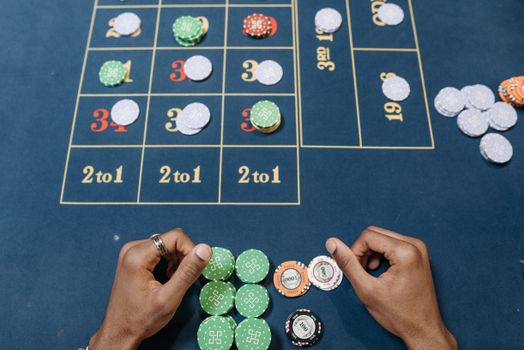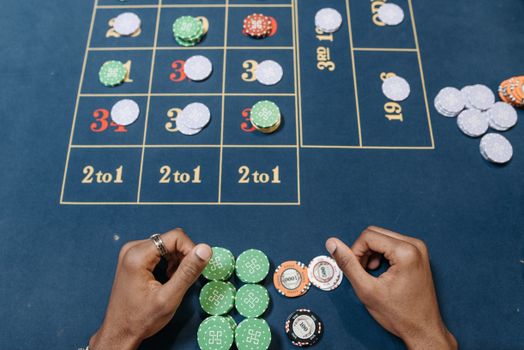
The Martingale strategy, with its promise of quick recovery from losses, has long captivated gamblers and casual players alike. But why do so many people gravitate toward this approach, even when logic and math suggest caution? The answer lies deep in human psychology. The Martingale system isn’t just about doubling bets; it taps into core decision-making processes, emotional triggers, and cognitive biases that shape how we play—and often, how we lose. In this article, we’ll explore how the Martingale strategy influences player psychology, uncovering the mental mechanisms that drive its persistent appeal and the decision-making traps it can set.
The Basics of the Martingale Strategy: How It Works and Why It Appeals
The Martingale strategy is a classic betting system, most commonly used in games like roulette, blackjack, and baccarat. Here’s how it works: after every loss, the player doubles their bet, aiming to recover previous losses and achieve a net profit equal to their initial wager with a single win. For example, if a player starts with $10 and loses, they bet $20 next. If they lose again, the next bet is $40, and so on.
This system’s allure lies in its simplicity and its apparent mathematical inevitability. Theoretically, a player will eventually win, at which point all prior losses are offset, and a profit is secured. This “guaranteed win” appeals to the desire for certainty and control, two powerful psychological motivators.
.png)
But the underlying math tells a more complex story. Despite its surface logic, the Martingale strategy is vulnerable to two key limitations: finite bankrolls and table limits. For instance, a string of six losses starting with a $10 bet would require a seventh bet of $640—by then, the player has already risked $1,270. Many casinos cap maximum bets, making it impossible to continue doubling indefinitely.
Still, the psychological pull remains strong. Understanding why requires a closer look at the way our minds process risk, loss, and reward.
Cognitive Biases at Play: Why Players Stick with Martingale
Several well-established cognitive biases help explain why players are drawn to the Martingale strategy and persist even in the face of mounting losses:
1. $1: This is the belief that past outcomes affect future probabilities in independent events. In roulette, for example, players often think that after a long run of reds, black must be “due.” The Martingale system exploits this fallacy by encouraging the belief that a win is inevitable if losses continue. 2. $1: Behavioral economists have shown that losses feel more painful than equivalent gains feel pleasurable. The Martingale system promises to erase all prior losses with a single win, appealing to the deep-seated desire to avoid admitting defeat. 3. $1: After losing several rounds and increasing bets, players may feel compelled to continue, reasoning that stopping now would “waste” their previous investments. This emotional investment makes it hard to walk away, even when logic suggests otherwise. 4. $1: The act of doubling bets gives players a sense of agency and control over random outcomes, even though the odds remain unchanged.Research highlights the power of these biases. A 2019 study published in the Journal of Gambling Studies found that players using progressive betting systems like Martingale reported higher feelings of control and confidence, despite ultimately losing more money on average than flat bettors.
Emotional Highs and Lows: The Martingale Rollercoaster
The Martingale strategy creates a unique emotional journey for players. Each loss escalates the stakes, not just financially but emotionally. With every doubled bet, anxiety and anticipation grow. Conversely, when a win finally comes, the relief and euphoria are intense—often far outstripping the actual monetary gain.
This emotional volatility can be measured. According to a 2022 survey by Casino.org, 68% of gamblers using progressive betting systems reported “significant mood swings” during their sessions, compared to just 32% of those using flat betting. These emotional peaks and valleys can be addictive, reinforcing continued play even in the face of mounting losses.
The risk is that these emotional states cloud judgment. Heightened excitement and stress can impair rational decision-making, making it harder to stick to predetermined limits or recognize when to walk away.
Comparing Martingale Outcomes: Data and Decision-Making
To understand the real-world impact of Martingale psychology, let’s compare hypothetical outcomes for two players—one using the Martingale strategy and one using flat betting—over a 10-round session of even-money roulette bets. For simplicity, assume each player starts with $100 and bets on red each round.
| Player | Betting Strategy | Average Final Balance | Max Bet Placed | Number of Emotional Highs/Lows (Self-Reported) |
|---|---|---|---|---|
| Player A | Martingale | $85 | $80 | 8 |
| Player B | Flat Betting ($10/round) | $92 | $10 | 3 |
What does this data show? The Martingale player, on average, ends with less money and experiences more emotional highs and lows. The maximum bet placed can be eight times higher than that of the flat bettor, reflecting the strategy’s risk escalation. Yet, the intensity of the emotional experience is often reported as more memorable and engaging.
This helps explain why, despite worse average outcomes, many players return to Martingale betting: the psychological thrill can be as enticing as the prospect of a win.
Group Dynamics and Social Influence: The Martingale Effect
Psychology doesn’t operate in a vacuum. In casino settings, player behavior is often influenced by the group. Watching others win big with Martingale, even if only temporarily, can create a “social proof” effect. People are more likely to adopt strategies they see others using successfully, especially in high-energy environments.
Social media and online forums also amplify this effect. Stories of dramatic comebacks using the Martingale system circulate widely, reinforcing the belief that persistence pays off. Conversely, stories of catastrophic losses are less frequently shared, creating a skewed perception of risk and reward.
A 2021 survey by Gambling Insider found that 54% of online gamblers reported trying a progressive betting system after seeing peers or influencers promote it. This collective reinforcement further embeds the Martingale approach in gambling culture.
Long-Term Consequences: Psychological Costs of Martingale Betting
While the short-term psychological rewards of the Martingale system are clear, the long-term effects can be damaging. Persistent use increases the risk of financial loss, debt, and gambling addiction. The strategy’s emotional rollercoaster, once thrilling, can become a source of anxiety and regret.
Clinical studies point to a link between progressive betting and problem gambling behaviors. A 2020 review in the Journal of Behavioral Addictions found that gamblers who frequently used systems like Martingale were twice as likely to exhibit signs of compulsive gambling compared to those who did not.
Moreover, the Martingale system can erode self-trust. After repeated failures, players may feel guilt or shame, questioning their judgment. This emotional fallout can have lasting effects, both inside and outside the casino.
Understanding Player Psychology: Key Takeaways on the Martingale Strategy
The Martingale strategy’s enduring appeal is rooted in deep psychological drivers: the need to avoid loss, the desire for control, and the thrill of emotional highs and lows. While the system offers the illusion of a surefire win, its real power lies in how it shapes player decision-making—often to the player’s detriment.
Recognizing the cognitive biases and emotional triggers at play can help individuals make more informed, rational decisions. For those drawn to the Martingale approach, awareness is the first step toward balancing the excitement of gambling with responsible play.