Casinos are more than just places to play games of chance. They are carefully designed environments, engineered to heighten excitement, prolong play, and subtly influence the choices of every visitor. Whether online or in-person, casinos employ a fascinating blend of psychology, neuroscience, and design to guide your behavior. Understanding these psychological tactics can help demystify the allure of gambling and shed light on why so many people find it hard to walk away. This article explores the powerful ways casinos shape our decision-making, the science behind player psychology, and what you can do to stay in control.
The Science Behind Casino Design: Setting the Stage for Influence
Casinos are meticulously crafted to maximize player engagement. From the moment you step onto the casino floor or log in to an online gaming site, you are immersed in an environment designed to keep you playing. The psychology of casino design—sometimes called “casino engineering” or “gaming ergonomics”—relies on sensory stimuli and subtle cues that influence behavior.
Consider the following facts: - The global gambling industry generated over $540 billion in revenue in 2022, according to Statista, with much of this success attributed to sophisticated player engagement strategies. - Studies have shown that ambient lighting, colors, and even the scent of a casino can increase the average time spent gambling by up to 30%. - Slot machines, which account for more than 70% of casino floor revenue in the United States, are arranged in clusters to encourage wandering and exploration.Casinos avoid clocks and windows, disorienting your sense of time. The layout is intentionally maze-like, so players are subtly “nudged” past more games and tempting opportunities. Even the carpets are designed in bright, swirling patterns that keep your eyes focused up toward the games, not down at your feet or the exits.
.png)
Reward Systems and the Brain: The Power of Variable Reinforcement
The psychological mechanics at play in casinos borrow heavily from behavioral science. One of the most powerful tools is the concept of “variable ratio reinforcement,” where rewards are given at unpredictable intervals. This is the same strategy that keeps people glued to social media feeds or video games.
Here’s how it works: - Slot machines and many casino games use random number generators (RNGs) to determine wins and losses. - The unpredictability of rewards—sometimes a small win, sometimes a near-miss—activates the brain’s dopamine pathways, the same neurochemical system involved in pleasure and addiction. - Studies published in the journal Neuron found that near-misses, where a player almost wins, trigger brain activity similar to actual wins, motivating players to keep going.This phenomenon is known as the “near-miss effect.” Casinos design games to frequently show players just-missed combinations, which increases the urge to keep playing in hopes that the next try will be the big win.
Social Proof, Atmosphere, and the Role of Community
Casinos are not just about individual play; they leverage the psychology of groups and social proof as well. When you see others winning, cheering, or even just having a good time, it reinforces the belief that you too might win big. This is especially prominent in live casino settings, but online casinos use chat functions, live leaderboards, and streamed game hosts to replicate that sense of community.
Some key examples: - Research has shown that the presence of other players increases risk-taking behavior. A 2014 study in the Journal of Gambling Studies found players bet up to 50% more when in a social environment. - Casino layouts often position high-payout machines or tables in visible locations. Celebrations and jackpot alarms are broadcast to encourage excitement. - Online casinos display real-time “recent wins” or “top winners” banners to showcase success and foster a sense of communal excitement.The atmosphere is carefully curated to feel both celebratory and exclusive—think complimentary drinks, VIP sections, and personalized rewards programs. These perks make players feel special and valued, further deepening their engagement.
Loss Aversion, Sunk Costs, and Decision-Making Biases
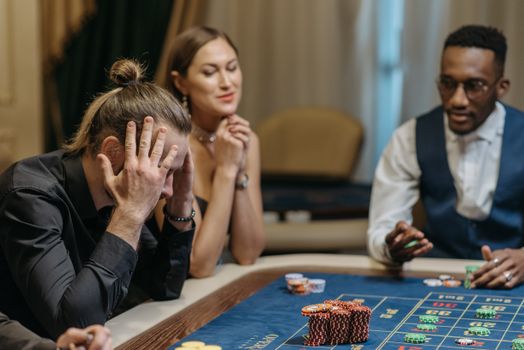
Casinos are experts at exploiting common cognitive biases, particularly loss aversion and the sunk cost fallacy. Loss aversion is the tendency for people to prefer avoiding losses over acquiring equivalent gains. The pain of losing $100 typically outweighs the pleasure of winning the same amount.
This bias leads to several behaviors: - Chasing losses: Players are more likely to make riskier bets after a loss, attempting to “win back” what they’ve lost, even when the odds are not in their favor. - Sunk cost fallacy: After investing time or money, people feel compelled to continue, believing they’re “due” for a win or that quitting would waste their prior investment.Casinos reinforce these tendencies by offering “second chance” bonuses or encouraging continued play after a near-miss. Even small rewards, such as free spins or match bonuses, nudge players to keep gambling in pursuit of redemption.
The following table summarizes some of the key psychological tactics used by casinos and their effects:
| Psychological Tactic | Description | Behavioral Effect |
|---|---|---|
| Variable Ratio Reinforcement | Unpredictable reward schedule (e.g., slot payouts) | Increases time spent playing, higher engagement |
| Near-Miss Effect | Displays outcomes that are close to a win | Triggers brain reward systems, motivates continued play |
| Social Proof | Visible winners, group excitement | Encourages risk-taking, longer sessions |
| Loss Aversion | Pain of losing outweighs pleasure of winning | Leads to chasing losses, riskier decisions |
| Sunk Cost Fallacy | Difficulty abandoning prior investments | Prolongs play, resistance to quitting |
Online Casinos: Digital Design and Behavioral Nudges
With the rise of online gambling, digital platforms have adopted and enhanced many of the psychological tactics pioneered in physical casinos. Online casinos can personalize experiences in real time, using data analytics to track player behavior and adapt offerings accordingly.
Some notable examples include: - Personalized bonuses: Algorithms analyze your play patterns to offer targeted bonuses, free spins, or cashback rewards that are most likely to entice you. - Push notifications and emails: Reminders of ongoing promotions or “exclusive offers” create a sense of urgency and encourage return play. - Gamification: Features like progress bars, achievement badges, and daily challenges turn gambling into a game-like experience, keeping players engaged for longer periods.Online platforms also simulate the social and sensory aspects of casinos. High-quality graphics, immersive sound effects, and live dealer games recreate the thrill of the casino floor. Meanwhile, features like autoplay and one-click re-bets make it easier for players to make rapid decisions—sometimes too rapidly for sound judgment.
A 2021 study by the UK Gambling Commission found that 27% of online gamblers admitted to spending more than they intended due to these digital nudges and features.
Awareness and Self-Control: How Players Can Take Back Control
Understanding player psychology can empower individuals to make more informed choices. While casinos are designed to maximize engagement and revenue, there are proven strategies for players to maintain greater self-control.
Here are a few practical tips: - Set strict time and spending limits before you start gambling, and stick to them regardless of wins or losses. - Take regular breaks to disrupt the immersive flow and regain perspective. - Be aware of common cognitive biases, like loss aversion and the sunk cost fallacy, and challenge your own reasoning if you find yourself chasing losses. - Use casino tools such as self-exclusion programs, deposit limits, and reality checks to help enforce boundaries.Many jurisdictions now require casinos to offer responsible gambling tools, and organizations such as Gamblers Anonymous or the National Council on Problem Gambling provide support for those who need it.
Final Thoughts on Player Psychology in Casinos
Casinos are masterpieces of psychological engineering, blending sensory stimulation, social dynamics, and cognitive biases to create environments where players feel compelled to keep playing. Whether it’s the flashing lights of a Vegas slot machine or the personalized offers of an online casino, these tactics are grounded in decades of research about how our brains respond to risk, reward, and community.
By understanding these influences, players can make more conscious and informed decisions about their gambling habits. Awareness is the first step toward maintaining control, enjoying the games responsibly, and recognizing when the odds—and the psychology—are not in your favor.